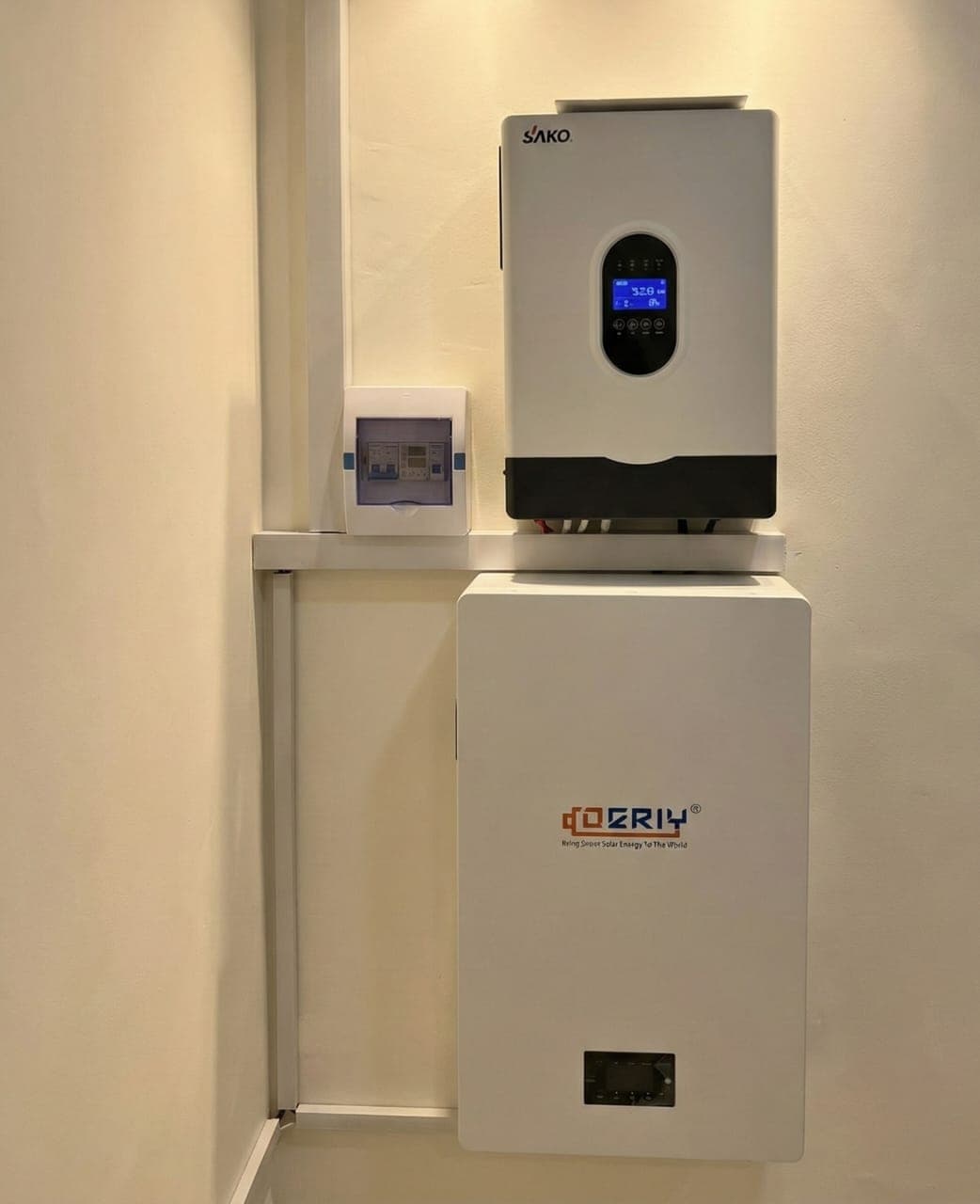
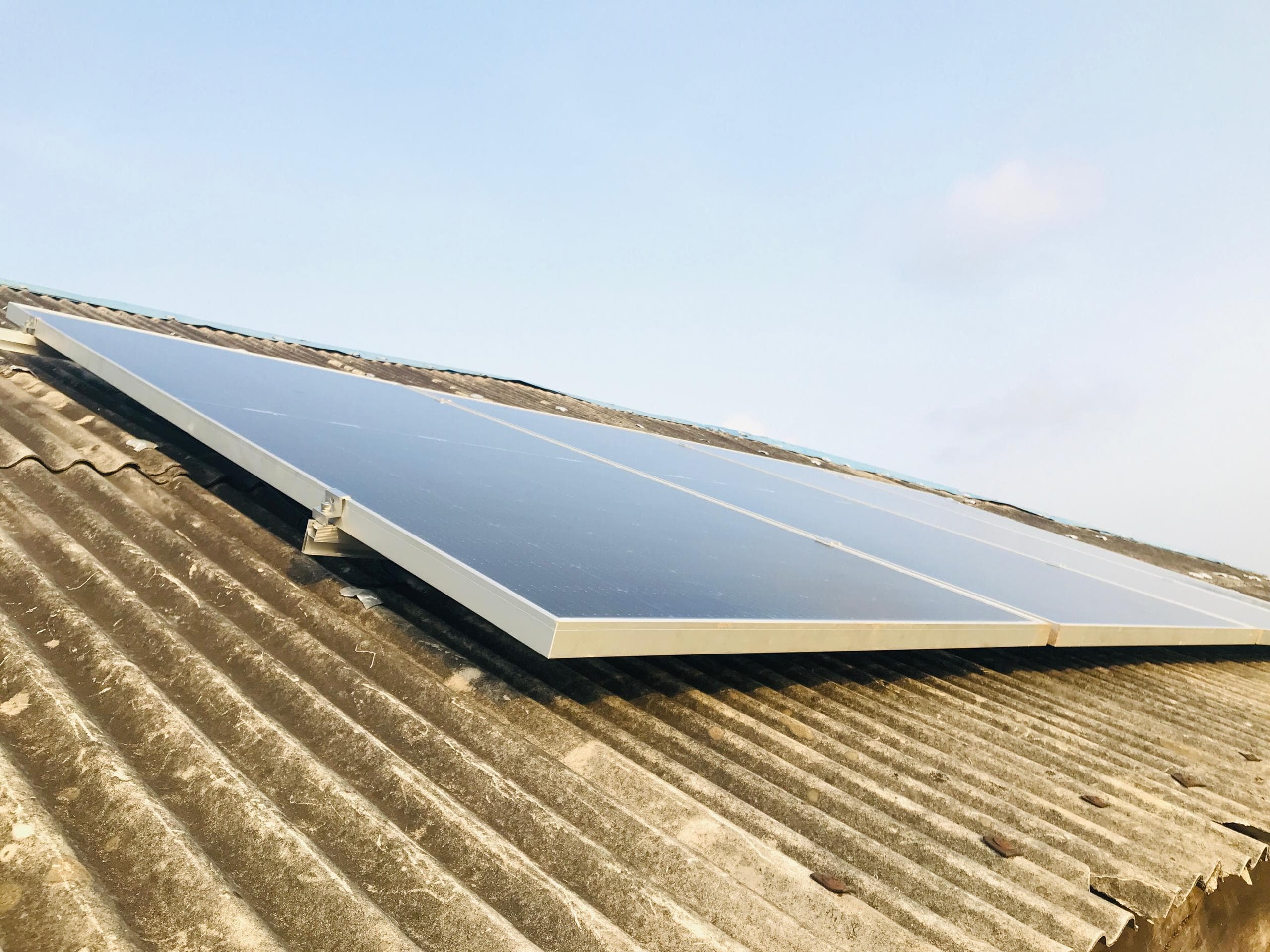
Most people in Port Harcourt ask for a "3kVA system" or "5kVA system" because that's what a neighbour got. That's not how sizing works, and it's how people end up with a system that dies at 9pm every night or costs far more than it needed to.
Your home's solar needs depend on three things: what you're running, how long you run it, and how much sun you actually get. Let's go through each one.
Step 1: List Your Appliances and Their Wattage
Start with every electrical item you want to power on solar. Here's a reference table for common Nigerian household appliances:
| Appliance | Typical Wattage |
|---|---|
| LED bulb | 7 -- 15W |
| Ceiling fan | 50 -- 75W |
| Standing fan | 40 -- 60W |
| 32" LED TV | 40 -- 60W |
| 43" -- 55" LED TV | 80 -- 120W |
| Decoder (DSTV/GOtv) | 15 -- 20W |
| Phone charger | 10 -- 20W |
| Laptop | 45 -- 90W |
| WiFi router | 10 -- 15W |
| 1.5HP split AC | 1,100 -- 1,500W |
| 1HP split AC | 750 -- 1,000W |
| Refrigerator (200L) | 100 -- 150W (avg running) |
| Chest freezer (300L) | 150 -- 200W (avg running) |
| Washing machine | 400 -- 800W |
| Electric iron | 1,000 -- 2,000W |
| Water pump (1HP) | 750W |
| Microwave | 800 -- 1,200W |
Write down every appliance and its wattage. If you don't know the exact number, check the label on the back of the device or search the model number online.
Step 2: Calculate Your Daily Energy Consumption
For each appliance, multiply the wattage by the number of hours you use it per day. This gives you watt-hours (Wh).
Example: A typical 3-bedroom flat in Port Harcourt
| Appliance | Watts | Hours/Day | Daily Wh |
|---|---|---|---|
| 8 LED bulbs | 90W total | 5h | 450Wh |
| 3 ceiling fans | 180W total | 8h | 1,440Wh |
| 43" TV + decoder | 100W | 4h | 400Wh |
| Refrigerator | 120W | 24h (cycling) | 700Wh |
| 2 phone chargers | 30W | 3h | 90Wh |
| Laptop | 60W | 4h | 240Wh |
| WiFi router | 12W | 10h | 120Wh |
| 1.5HP AC (bedroom) | 1,300W | 6h | 7,800Wh |
| Total | ~11,240Wh |
That's roughly 11.2 kWh per day for this example home with one AC unit running at night.
Port Harcourt note: PHCN supply in Rivers State averages 4 to 8 hours daily at best. Many areas get far less. Size your system to cover the full 24 hours, not just the gap hours.
Step 3: Account for System Losses
No solar system is 100% efficient. Inverters, wiring, and battery charging all introduce losses. A realistic efficiency factor is 80% (0.8).
Divide your daily consumption by 0.8:
11,200Wh ÷ 0.8 = 14,000Wh required from your panels
Step 4: Calculate Panel Size
Port Harcourt receives an average of 4.5 to 5 peak sun hours (PSH) per day. This is the standard figure used for solar calculations in the Niger Delta region.
Required panels = Daily Wh needed ÷ Peak Sun Hours
14,000Wh ÷ 4.5 PSH = ~3,111W of panels
Round up. You need at least 3.2kW to 3.5kW of solar panels for this home.
If you want to charge your batteries faster and have a buffer for cloudy days (which do happen in Port Harcourt during harmattan and rainy season), go to 4kW.
Step 5: Size Your Battery Bank
Your battery bank needs to store enough energy for the hours when the sun isn't shining. If PHCN gives you nothing and you want 12 hours of backup overnight:
12,000Wh needed overnight (rough estimate for our example)
Lithium iron phosphate (LiFePO4) batteries can be discharged to 80% without damage. Lead-acid should only go to 50%.
For LiFePO4:
12,000Wh ÷ 0.8 = 15,000Wh battery capacity needed
That's roughly a 48V 300Ah lithium battery bank (48V x 300Ah = 14,400Wh). A 400Ah bank gives you more comfort.
For lead-acid (not recommended for daily deep cycling):
12,000Wh ÷ 0.5 = 24,000Wh needed
Lead-acid works out to nearly double the battery capacity for the same usable storage. This is why LiFePO4 is the better long-term choice despite the higher upfront cost.
Step 6: Choose Your Inverter Rating
Your inverter needs to handle your peak simultaneous load, which is the total wattage of everything that could be running at once.
In our example, if the AC, refrigerator, fans, and TV are all on at the same time:
1,300W (AC) + 120W (fridge) + 180W (fans) + 100W (TV) + other = ~1,900W peak
A 3kVA inverter (2,400W continuous) would be too close to the limit. Go for a 5kVA inverter to handle startup surges and future additions.
Key rule: Never run your inverter above 80% of its rated capacity continuously. Startup surges (especially from ACs and motors) can be 2 to 3x the running wattage.
What System Size Do Most Port Harcourt Homes Actually Need?
| Home Type | Typical Load | Recommended System |
|---|---|---|
| 1-bed flat, no AC | 3 -- 5 kWh/day | 1.5kW panels, 100Ah LiFePO4, 2kVA inverter |
| 2-bed flat, no AC | 5 -- 8 kWh/day | 2kW panels, 200Ah LiFePO4, 3kVA inverter |
| 3-bed flat, 1 AC | 10 -- 14 kWh/day | 3.5kW panels, 300Ah LiFePO4, 5kVA inverter |
| 4-bed duplex, 2 ACs | 18 -- 25 kWh/day | 6kW panels, 500Ah LiFePO4, 8kVA inverter |
| Business/shop | Varies | Custom assessment required |
Common Sizing Mistakes in Port Harcourt
The Smart Way to Size Your System
Use this quick formula as a starting check:
1. Add up all appliance watts
2. Multiply by daily hours of use → Daily Wh
3. Divide by 0.8 (efficiency) → Required Wh from panels
4. Divide by 4.5 (Port Harcourt PSH) → Panel kW needed
5. Size battery for your backup hours ÷ 0.8 (LiFePO4)
6. Size inverter at 1.25x your peak simultaneous load
Or just tell us your appliances and we'll do the calculation for you.