Walk into any solar shop in Port Harcourt and you'll see both options on the shelf. Tubular lead-acid batteries from ₦85,000. Lithium iron phosphate (LiFePO4) batteries from ₦350,000. Most buyers go with the lead-acid because the math seems obvious.
It isn't. Here is the full comparison.
What Each Battery Type Actually Is
Lead-acid (tubular or AGM): The same basic technology that's been in car batteries for over a century. A liquid electrolyte (or gel/glass mat) stores charge through a chemical reaction between lead plates and sulphuric acid.
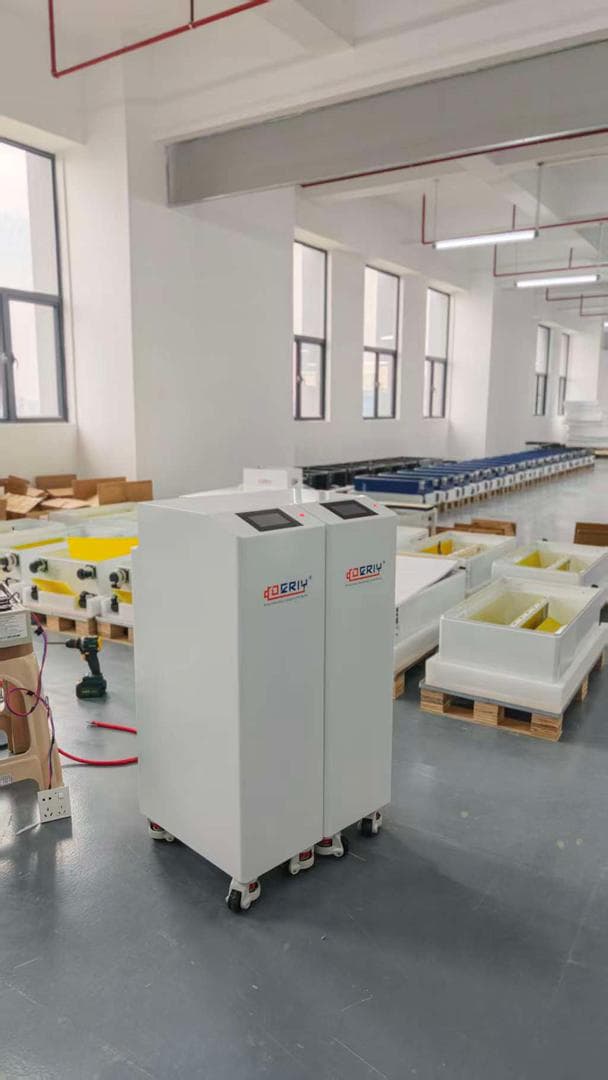
LiFePO4 (lithium iron phosphate): A lithium battery chemistry specifically developed for deep cycle, stationary storage applications. Different from the lithium-ion in your phone — LiFePO4 is thermally stable, does not catch fire easily, and is built for thousands of charge cycles.
The Critical Numbers Side by Side
| Specification | Tubular Lead-Acid | LiFePO4 |
|---|---|---|
| Usable capacity (DoD) | 50% | 80% |
| Cycle life | 400 to 600 cycles | 3,000 to 6,000 cycles |
| Lifespan (daily cycling) | 1.5 to 2.5 years | 8 to 15 years |
| Charge efficiency | 70 to 85% | 95 to 99% |
| Self-discharge per month | 5 to 15% | 1 to 3% |
| Weight (200Ah unit) | ~60 to 70kg | ~25 to 30kg |
| Temperature sensitivity | High | Low |
| Maintenance required | Yes (fluid checks) | None |
| BMS protection | No | Built-in |
Understanding Depth of Discharge
This is the most misunderstood point. A 200Ah lead-acid battery should only be discharged to 50% to preserve lifespan. That means you only get 100Ah of usable storage.
A 200Ah LiFePO4 battery can be discharged to 80% without damage. You get 160Ah of usable storage.
200Ah Lead-Acid: 100Ah usable (50% DoD)
200Ah LiFePO4:  160Ah usable (80% DoD)
To get the same usable storage as one 200Ah LiFePO4 battery, you need two 200Ah lead-acid batteries.
The Real Cost Over Time
Let's use a common setup: a home needing 9.6kWh of usable battery storage (a 48V, 200Ah LiFePO4 equivalent).
Lead-Acid Path
To match 9.6kWh usable at 50% DoD, you need a 19.2kWh bank:
- 4 × 200Ah 12V tubular batteries in series-parallel = ₦85,000 × 8 = ₦680,000
- Replace every 2 years: ₦680,000 × 5 replacements over 10 years = ₦3,400,000 total
- Add maintenance, watering, cleaning: ~₦30,000/year = ₦300,000 over 10 years
- Lead-acid 10-year total: ~₦3,700,000
LiFePO4 Path
- 1 × 48V 200Ah LiFePO4 battery: ~₦480,000
- Lasts 10+ years with no replacement needed
- Zero maintenance
- LiFePO4 10-year total: ~₦480,000
Over 10 years, LiFePO4 costs nearly 87% less than lead-acid for the same usable storage. The battery that looks 5x more expensive is actually the cheaper option.
Performance in Port Harcourt Conditions
Rivers State's climate creates specific challenges for batteries:
Heat. Port Harcourt regularly reaches 32 to 36°C. High temperatures degrade lead-acid batteries significantly — every 10°C above 25°C cuts lead-acid lifespan roughly in half. LiFePO4 handles heat much better, maintaining performance up to 45°C.
Humidity. The Niger Delta's humidity accelerates corrosion on lead-acid terminals and cases. LiFePO4 batteries are sealed with no exposed electrolyte.
Irregular charging. Erratic PHCN supply and partial solar days (cloud cover during rainy season) mean batteries frequently get partial charges. Lead-acid suffers sulfation under partial state of charge conditions. LiFePO4 is not affected.
Frequent deep cycling. If PHCN gives you 4 hours and your generator is off, you're deeply discharging your battery daily. At that rate, a lead-acid battery reaches end of life in 18 to 24 months. LiFePO4 handles this for a decade.
Common Misconceptions
"LiFePO4 is dangerous." LiFePO4 is the safest lithium chemistry available. Unlike lithium-ion (NMC or NCA) in consumer electronics, LiFePO4 does not experience thermal runaway or catch fire under normal conditions. Its chemistry is inherently stable.
"Lead-acid works fine, I've seen people use them for years." Some do. Usually because they're not cycling deeply, have excellent charge control, and keep the batteries in a cool, ventilated space. Most home users in Port Harcourt are not doing all three.
"I can just replace lead-acid when it dies." You will. Multiple times. At ₦680,000 per replacement set. Add up those replacements and the price comparison changes completely.
"LiFePO4 is overkill for a small system." The smaller the system, the more important efficiency is. A small system running lead-acid wastes 15 to 30% in charging losses on every cycle. LiFePO4 wastes under 5%.
When Lead-Acid Might Make Sense
There are legitimate cases:
- Very tight upfront budget
- Temporary setup (construction site, short-term rental property)
- Very low daily cycling demand (system barely used)
- Replacement of an existing lead-acid bank in a system not worth upgrading
For a permanent home installation in Rivers State, lead-acid is almost never the better choice when the full lifecycle cost is considered.
What to Look For When Buying LiFePO4
Not all LiFePO4 batteries are equal. Key checks:
- Built-in BMS (Battery Management System): Protects against overcharge, over-discharge, and short circuit. Never buy a lithium battery without one.
- Reputable cells: Batteries using CATL, EVE, or CALB cells are well-regarded. Avoid unbranded cells with no cell origin disclosure.
- Certifications: Look for IEC 62619, UN 38.3, or UL certifications.
- Warranty: Minimum 5 years, with 3,000 cycle guarantee.
- Local support: Buy from a supplier who can service or replace the unit in Nigeria, not a once-off import with no after-sales.