
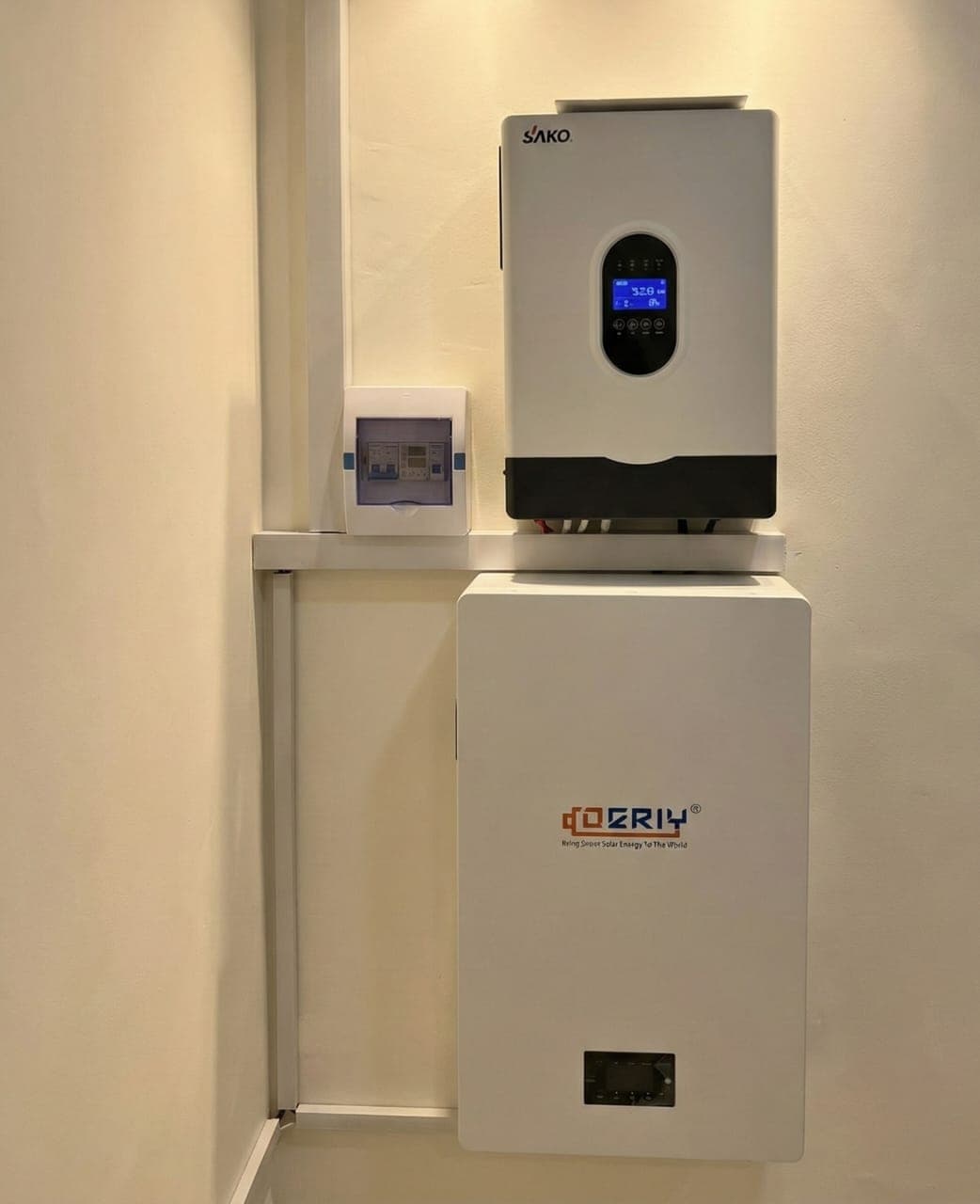
When you're buying a solar system or inverter in Nigeria, you'll come across two terms: pure sine wave and modified sine wave. Sellers don't always explain the difference clearly. Some will push the modified sine wave option because it's cheaper. Here is what you actually need to know before you buy.
What Does an Inverter Actually Do?
Your solar panels and batteries store power as DC (direct current). Your home appliances run on AC (alternating current) from the grid. An inverter converts DC from your battery bank into AC that your appliances can use.
The key difference between inverter types is in the shape of the AC electrical signal they produce.
Understanding the Waveform
Electrical AC power from the grid follows a smooth, continuous S-shaped curve that repeats 50 times per second (50Hz in Nigeria). This is called a sine wave.
The modified sine wave is essentially a rough approximation of AC power. For simple resistive loads like a light bulb or basic heating element, it works fine. For anything more complex, problems start.
Pure Sine Wave Inverters
A pure sine wave inverter produces power that is virtually identical to what you get from PHCN (when PHCN is actually working). It's the gold standard for solar installations.
What you get:
- Clean, stable power for all appliances
- Appliances run cooler and more efficiently
- Compatible with every device you own
- Suitable for sensitive electronics (medical equipment, lab instruments, audio equipment)
- Longer appliance lifespan
Cost: Higher upfront. A quality 3kVA pure sine wave inverter in Nigeria costs ₦180,000 to ₦350,000+.
Modified Sine Wave Inverters
A modified sine wave inverter produces a stepped approximation of AC power. It's cheaper to manufacture and therefore cheaper to buy.
What you get:
- Lower upfront cost
- Adequate for simple loads (basic bulbs, resistive heaters, older power tools)
- Smaller and lighter units typically
Problems:
- Appliances run hotter, reducing lifespan
- Higher electricity consumption (less efficient operation)
- Buzzing or humming noise from motors and fans
- Incompatibility with many modern appliances
Cost: ₦40,000 to ₦120,000 for a 3kVA unit.
Which Appliances Are Affected?
This is the most important section. Here is a clear breakdown:
| Appliance | Modified Sine Wave | Pure Sine Wave |
|---|---|---|
| LED bulbs | Works | Works |
| Incandescent bulbs | Works | Works |
| Phone chargers | Usually works | Works |
| Basic battery chargers | Usually works | Works |
| Resistive heater/kettle | Works | Works |
| Ceiling fans / standing fans | Buzzes, runs hot, reduced lifespan | Works perfectly |
| Split AC units | May not work / damages compressor | Works perfectly |
| Refrigerators / freezers | Compressor strain, overheating | Works perfectly |
| Laptops | Risk of charger damage over time | Works perfectly |
| LED TVs / Smart TVs | Possible flicker, reduced lifespan | Works perfectly |
| Medical equipment | Do not use | Works (verify specs) |
| Audio amplifiers | Audible hum in output | Works perfectly |
| Laser printers | May not work | Works perfectly |
| Variable speed motors | Do not use | Works perfectly |
| Microwave ovens | May not heat properly | Works perfectly |
Critical warning for Nigerian homes: If you run an AC unit on a modified sine wave inverter, you risk damaging the compressor. Compressor replacement costs ₦80,000 to ₦250,000 and often voids the AC warranty. This alone can wipe out any savings from buying a cheaper inverter.
The Efficiency Difference
Modified sine wave inverters are not just harder on appliances. They cause appliances to draw more power to do the same work.
A motor (fan, fridge compressor, AC compressor) on modified sine wave power can draw 15% to 30% more current than the same motor on pure sine wave power. That means:
- Your battery runs out faster
- Your panels need to generate more
- Your electricity bill for any hybrid (solar + PHCN) system goes up
A fridge rated at 120W on pure sine wave might draw 150W on modified sine wave. Over 24 hours, that's 720Wh vs 600Wh. Over a year: 262kWh extra. That's wasted battery capacity every single day.
The Price Trap
Modified sine wave inverters are marketed on price. "3kVA for ₦65,000" sounds attractive compared to "3kVA for ₦240,000". Here is what that price gap actually costs you:
| Factor | Modified Sine Wave | Pure Sine Wave |
|---|---|---|
| Purchase price (3kVA) | ₦65,000 | ₦240,000 |
| Appliance lifespan impact | Reduced by 20-40% | Full rated lifespan |
| Efficiency loss | 15-30% more battery drain | Rated efficiency |
| AC compatibility | High risk of damage | Fully compatible |
| Typical replacement interval | 2 to 3 years | 5 to 10 years |
| 5-year true cost | ₦65K × 2 + appliance repairs | ₦240K |
| Verdict | False economy | Better long-term value |
What About Hybrid Inverters?
Most modern solar installations in Nigeria use hybrid inverters, which combine the inverter, solar charge controller, and (sometimes) mains bypass into one unit. Every quality hybrid inverter on the market today (Victron, Growatt, Deye, PowMr, Solis) produces pure sine wave output. This is not a feature you have to look for separately; it's standard in hybrid units.
If someone is selling you a "hybrid solar inverter" with modified sine wave output, walk away.
When Modified Sine Wave Makes Sense
There are legitimate use cases for modified sine wave inverters, just not for whole-home solar installations:
- Powering a job site with basic power tools temporarily
- Small off-grid cabins with only resistive loads (lights, a phone charger)
- Emergency backup for a very limited load (one bulb, one phone)
- Powering equipment that explicitly states it accepts modified sine wave input
For a home in Port Harcourt, Delta State, or Bayelsa State running fans, a fridge, a TV, and especially any air conditioning, modified sine wave is the wrong choice.
Summary: Which Should You Choose?
- You have AC units
- You have a refrigerator or freezer
- You use a laptop or sensitive electronics
- You want appliances to last their full lifespan
- You want maximum battery efficiency
- This is a permanent home installation
- You only power basic resistive loads
- It's a temporary or emergency setup
- No motors, compressors, or smart electronics
- All devices explicitly support MSW input
For any proper solar installation in Nigeria, the answer is pure sine wave. The inverter is not where you cut corners. It's the heart of the system.


