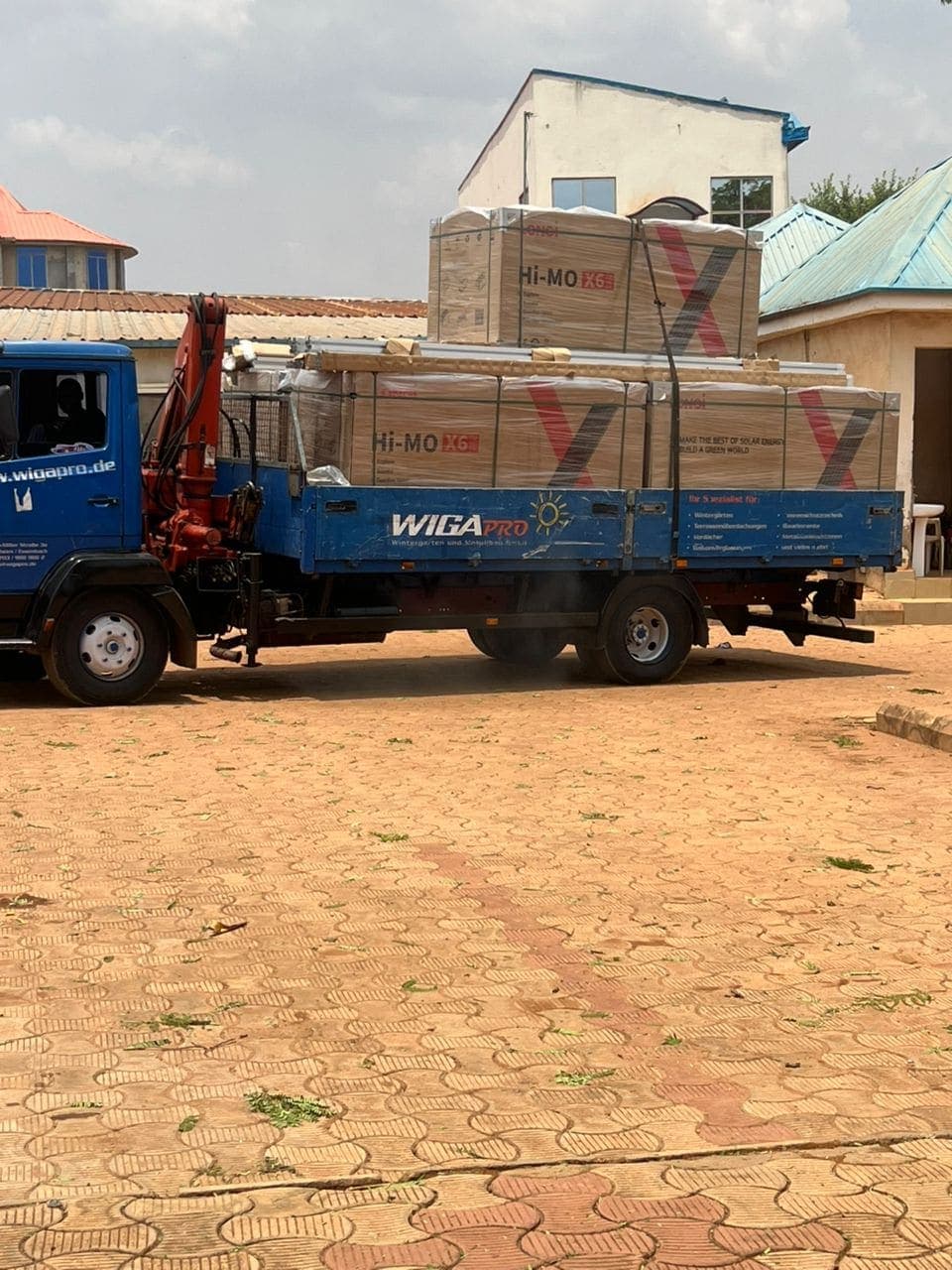

Some people in Port Harcourt buy panels at the market, an inverter online and batteries from a shop. Then a technician wires them up. Does this save money?
What can go wrong
1. Parts that do not match
The panels may be too many or too few for the inverter. The battery voltage may be wrong. The inverter may have no lithium setting. Read how many panels a 5kVA inverter needs.
2. Thin cables
Thin cables get hot. Hot cables waste power and can burn. Solar cables carry a lot of current.
3. No fuses or breakers
Without the right DC fuses and breakers, a short circuit can start a fire.
4. No earthing or surge protection
Thunderstorms are common in the rainy season. Without earthing and surge protection, lightning can destroy the inverter. See earthing and surge protection.
5. Bad roof work
Panels screwed only into the roof sheet can lift in storms. Unsealed holes leak.
6. No warranty
If something fails, the shop blames the technician. The technician blames the parts. You pay again.
Side by side
| DIY / part-by-part | Professional installer | |
|---|---|---|
| System sizing | Guesswork | Calculated from your load |
| Cables and protection | Often missing | Included |
| Roof safety | Risky | Ladders, harness, proper mounting |
| Warranty | Parts only, maybe | Parts + workmanship |
| After-sales | Unclear | One number to call |
When DIY is fine
- A small solar lamp or fan kit
- A portable power station
- A tiny 12V setup for one room
When to hire a pro
- Any system with a 24V or 48V battery bank
- Roof panels, especially on an upstairs building
- Anything running a fridge, pump or AC