
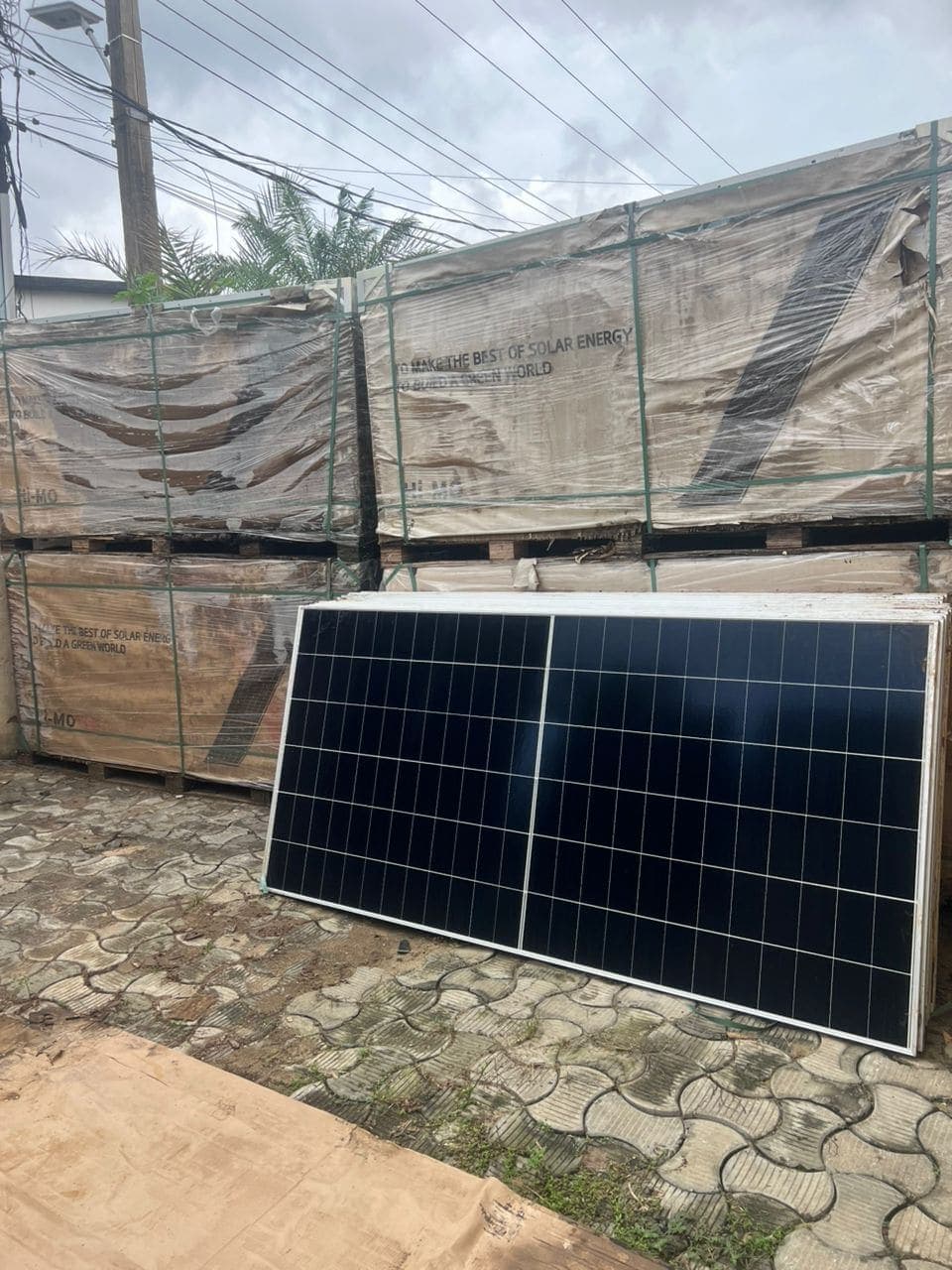
Some new panels can catch sunlight on both sides. They are called bifacial. Normal panels catch light on one side. They are called monofacial. Should you pay for two sides?
How the back side works
Sunlight hits the ground or roof and bounces up. A bifacial panel can catch some of that bounced light on its back. That makes a little extra power.
But this only works if light can actually reach the back.
Side by side
| Bifacial | Monofacial | |
|---|---|---|
| Sides that make power | Two | One |
| Extra power on a roof | Very little | None |
| Extra power on raised ground mount | About 5 to 15% | None |
| Weight | Often heavier (glass-glass) | Lighter |
| Price | Higher | Lower |
Roofs in Port Harcourt and Warri
Most homes put panels on rails close to the roof sheet. The gap is small and dark. Little light reaches the back. So a bifacial panel acts almost like a normal one. You pay more for little gain.
Where bifacial makes sense
- Ground mounts in a compound with space, raised high
- Carports over a light-coloured floor
- Flat concrete roofs painted white, with panels raised on frames
- Schools, churches and farms with open land
Read roof mount vs ground mount to see which suits you.
A note on weight
Many bifacial panels have glass on both sides. They can be heavier. On older roofs in places like Sapele, we check the roof first.
Our advice
For a normal home roof: buy a good, genuine monofacial mono panel. For an open ground site: ask us about bifacial.


