
There are two questions hiding in "how long does a solar battery last?":
- How many years before it needs replacing?
- How many hours does it power your home each night?
We answer both.
How many years: battery lifespan in Nigeria
Batteries wear out by cycles: one full drain and recharge. A home solar battery in Port Harcourt cycles almost every day, so cycle life translates directly into years.
| Battery type | Usable capacity | Typical cycle life | Real lifespan with daily use |
|---|---|---|---|
| LiFePO4 (lithium iron phosphate) | 80–95% | 3,000–6,000 | 8–15 years |
| Gel / AGM | ~50% | 500–800 | 2–3 years |
| Tubular (flooded lead-acid) | ~50% | 400–600 | 1.5–2.5 years |
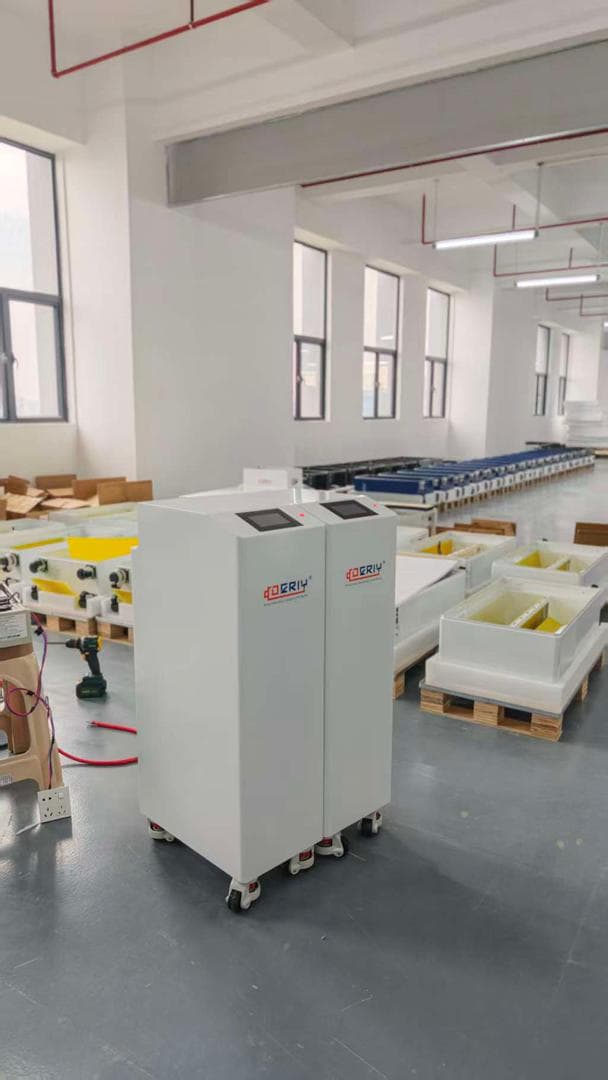
That is why a lithium battery that costs more on day one usually costs less per year of use. We break down the maths in LiFePO4 vs lead-acid.
What shortens battery life in Nigerian homes
- Heat. A battery in a hot, unventilated store room ages faster. Keep it in the coolest room you have, off the floor and out of direct sun.
- Draining it flat. Lead-acid batteries hate being discharged below 50%. Lithium handles deep discharge far better, but its BMS should still stop it before it hits zero.
- Never fully charging. This is the big one. If your system relies on a few hours of grid supply to charge (an "inverter-only" setup), the battery is rarely full. Lead-acid batteries sulphate and die within months. Read inverter only vs full solar.
- Too few panels. In rainy season, an undersized panel array cannot refill the battery, so it sits half-empty for weeks.
- Mixing old and new batteries. The weakest battery drags the whole bank down.
How many hours: backup time each night
Use this simple formula:
Backup hours = Usable battery kWh ÷ Load in kW
A 5kWh lithium battery gives about 4.5kWh usable.
- 300W load (lights, fans, TV): about 15 hours
- 500W load (add fridge and decoder): about 9 hours
- 1,200W load (add a 1.5HP inverter AC): about 3.5 to 4 hours
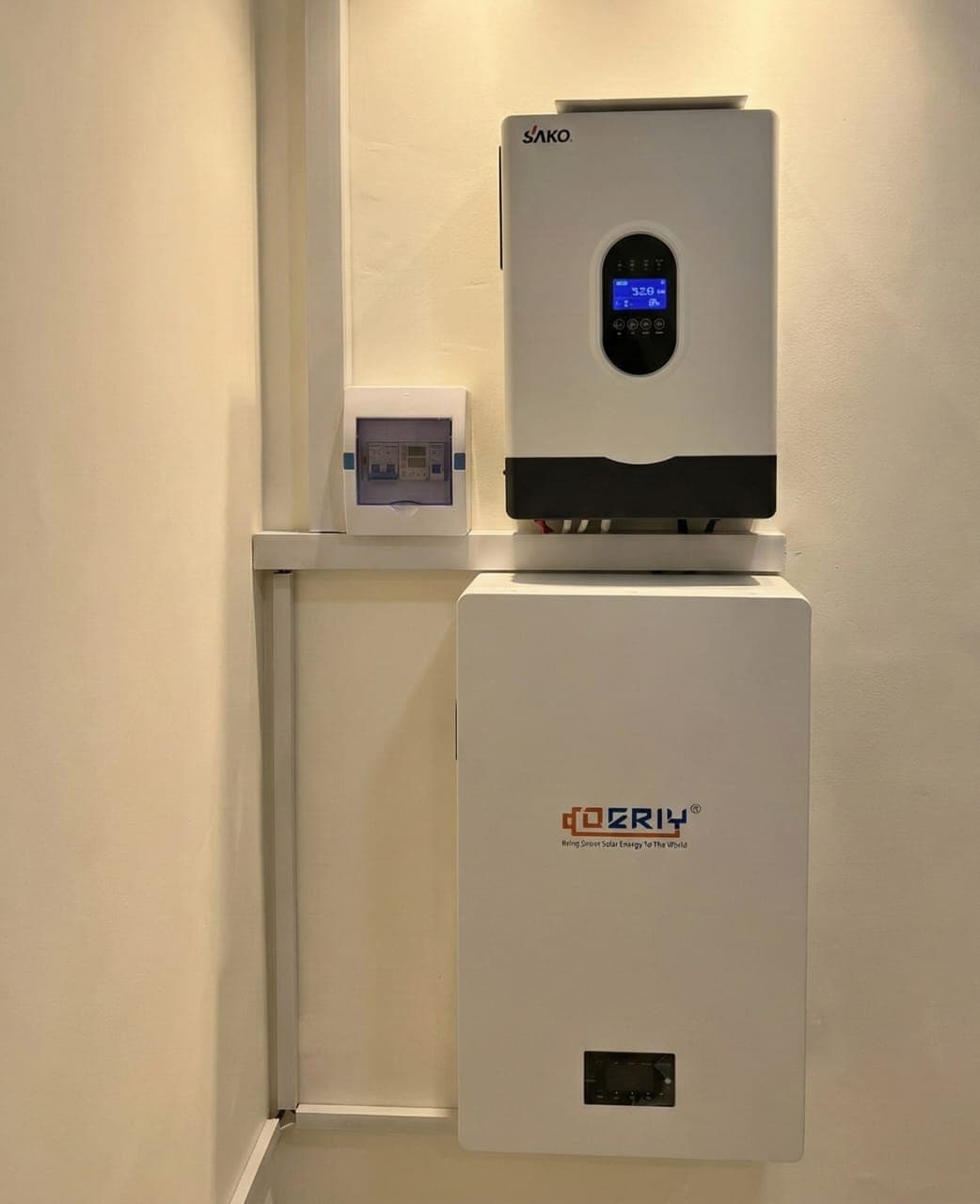
Rule of thumb: if you want an AC through the night, plan on at least 8kWh of lithium storage. Our 6kVA family package comes with 16kWh, so the AC can run all night alongside everything else.
Signs your battery is dying
- The system switches off much earlier at night than it used to
- The inverter shows full charge but drops fast once the sun goes down
- Lead-acid batteries are swollen, leaking or getting very hot
- You are topping up distilled water more often (tubular batteries)
Should you replace with lithium?
In almost every case we see in Rivers, Delta and Bayelsa, yes. A lithium upgrade typically gives you more usable storage in a smaller space, no maintenance and a battery that outlasts several lead-acid replacements. Whether you can keep your current inverter depends on its charging profile and voltage, and we check that on site.
Not sure how much storage you need? Try the solar calculator or see what a 3kVA, 5kVA and 10kVA system can power.