
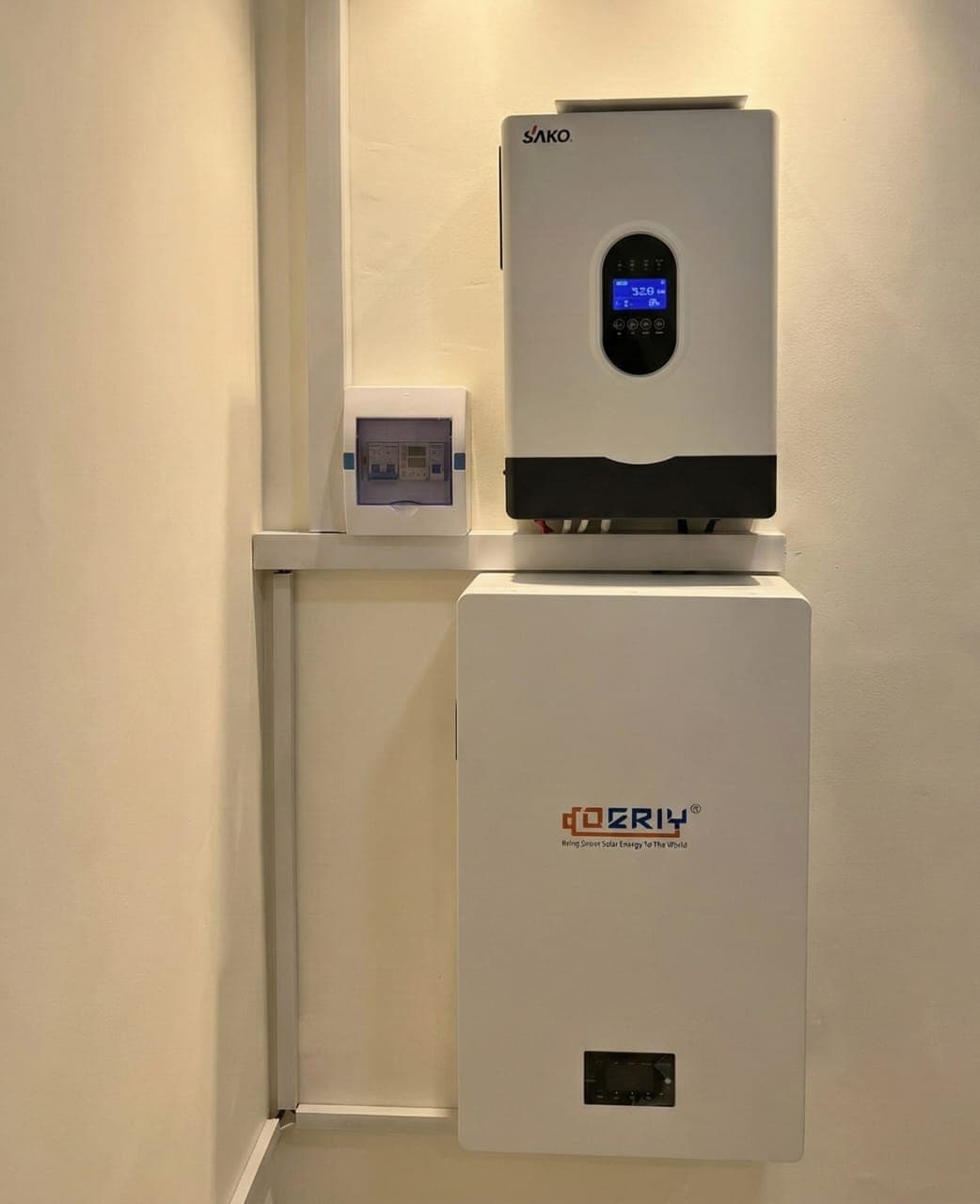
Used inverters are sold in markets and online across Nigeria. Some are good. Many are not. Here is how to think about it.
Risks of a used inverter
- Worn parts. Fans, capacitors and relays wear out.
- Old design. Many older units have no solar input or no lithium setting.
- Modified sine wave. Some cheap units are not pure sine wave. Read pure vs modified sine wave.
- No warranty.
- Fake ratings. A "5kVA" label may not mean 5kVA of real power.
Side by side
| New hybrid inverter | Used inverter | |
|---|---|---|
| Pure sine wave | Yes | Not always |
| MPPT solar input | Built in | Often missing |
| Lithium support | Yes | Often no |
| Warranty | Yes | Usually no |
| Price | Higher | Lower |
If you still want used
- Ask for the brand and model. Look up the datasheet.
- Check it is pure sine wave.
- Check for lithium battery settings.
- Listen to the fan. Smell for burning.
- Test it with a real load, like a fridge.
The battery problem
A cheap inverter with wrong charge settings can ruin an expensive lithium battery. The battery is the costliest part. Do not risk it to save a little on the inverter. See inverter prices in Nigeria.

