
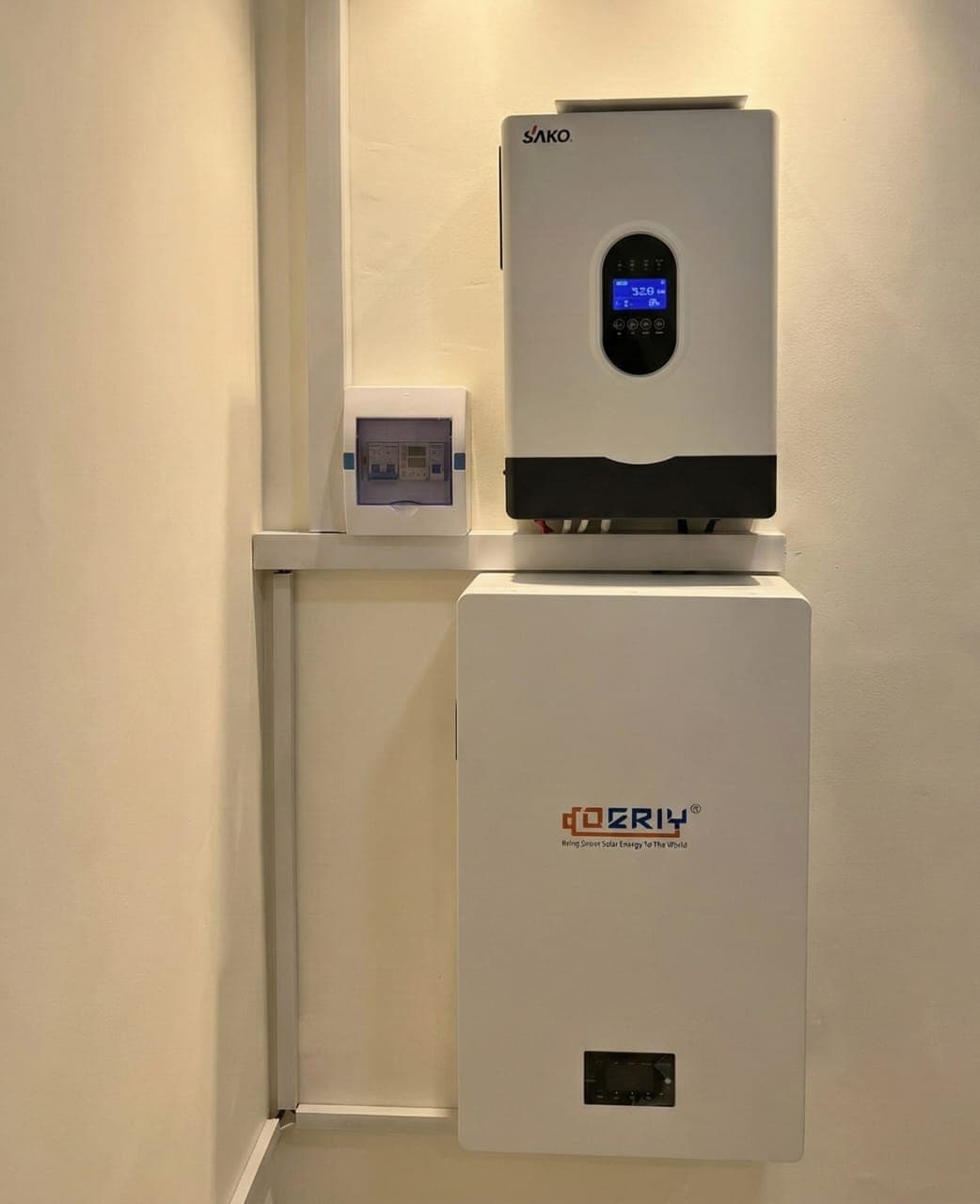
Between your solar panels and your battery, there is a box that controls charging. It is called a charge controller. There are two kinds: MPPT and PWM.
What a charge controller does
Panels make power at one voltage. Batteries need it at another. The controller fixes the gap and stops the battery from overcharging.
PWM: the simple one
PWM connects the panel to the battery in quick on-off pulses. It is cheap. But it pulls the panel voltage down to the battery voltage. Any extra voltage is wasted.
MPPT: the smart one
MPPT keeps checking for the panel's best point. That is the "maximum power point". It then converts the extra voltage into extra current. Less is wasted.
Side by side
| MPPT | PWM | |
|---|---|---|
| Power harvested | More | Less |
| Extra over PWM | Often 15 to 30% | – |
| Works with big panels (450W–600W) | Yes | Poorly |
| Cloudy weather | Better | Worse |
| Price | Higher | Lower |
| Built into hybrid inverters | Usually | Rarely |
Why it matters in the rainy season
In Port Harcourt and Yenagoa, many rainy-season days are cloudy. Every bit of power counts. MPPT squeezes more charge from weak light. That means fuller batteries at night.
Do you need a separate controller?
Most hybrid inverters we install have MPPT built in. You do not buy it separately. Some old inverters have no solar input. Then you need an external MPPT controller, or a new inverter. Read inverter only vs full solar.
Check the limits
Every MPPT has limits: maximum voltage and maximum power. Wiring too many panels can damage it. That is why panel count is a design job. See how many panels for a 5kVA inverter.

