
Water is a daily headache in much of Port Harcourt, Warri and Yenagoa. Most homes with a borehole pump into an overhead tank, and that pump is often the reason the generator gets switched on every morning. Solar can take over that job, but pumps are tricky loads.
Why pumps are hard work for an inverter
An electric motor draws a big surge when it starts, often three to six times its running power for a second or two. A 1HP pump that runs at about 750W may pull 2,500W to 4,000W for that moment. If the inverter cannot supply the surge, it trips.
| Pump size | Running power | Startup surge (approx.) | Minimum inverter on a home system |
|---|---|---|---|
| 0.5HP | ~370W | 1,200–2,000W | 3kVA (with little else running) |
| 0.75HP | ~550W | 1,800–3,000W | 5kVA |
| 1HP | ~750W | 2,500–4,000W | 5kVA |
| 1.5HP | ~1,100W | 3,500–6,000W | 8kVA, or a soft-start controller |
Two ways to put a borehole on solar
Option 1: Run the pump from your home solar system
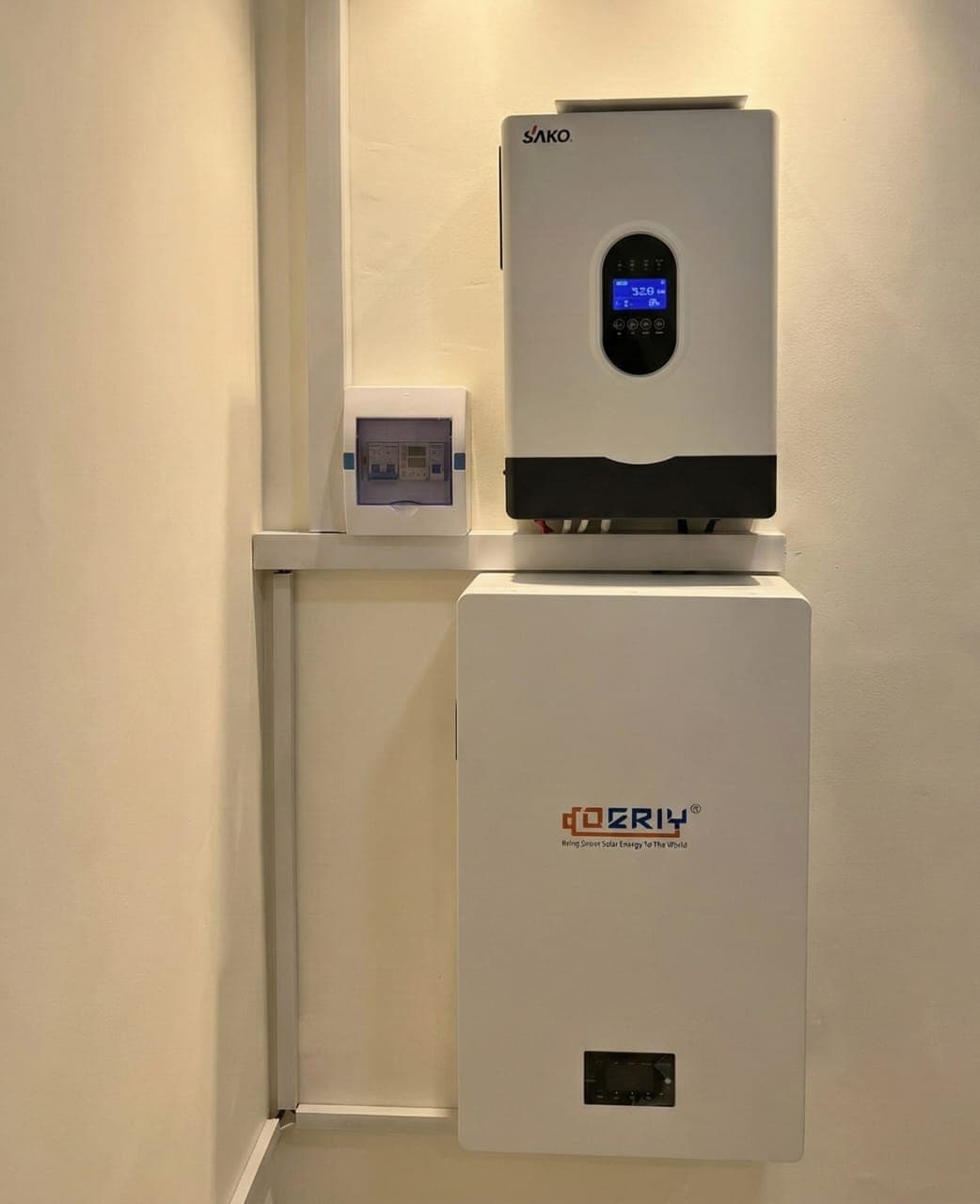
The pump becomes another load on your hybrid inverter.
- Run it in daylight. Panels are producing, so the pump barely touches the battery. A timer can switch it on at, say, 11am.
- Size the inverter for the surge. Usually 5kVA or more for a 1HP pump, alongside your other daytime loads.
- Add the pump's energy to your panel calculation. A 1HP pump running 1.5 hours a day uses about 1.1kWh.
Best when you already need a 5kVA or bigger system for the house.
Option 2: A dedicated solar pump
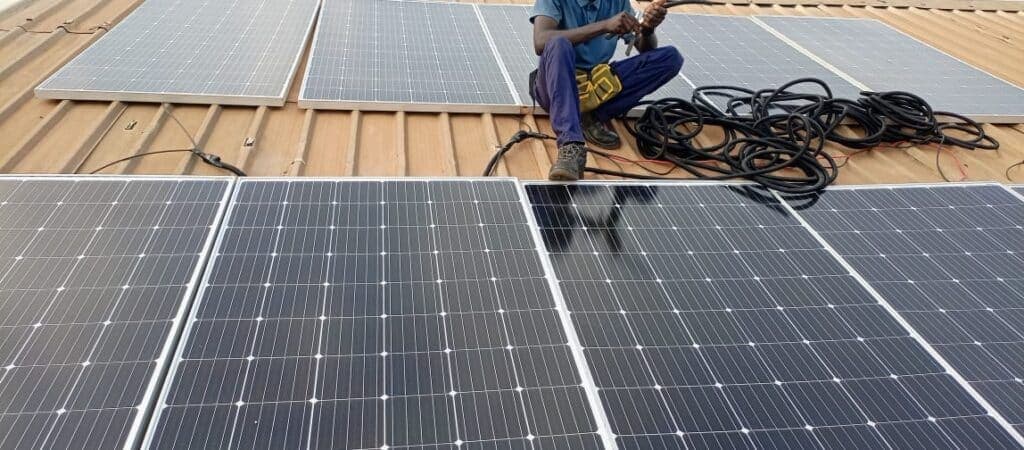
A solar pumping inverter (or a DC solar pump) is wired straight to its own set of panels with no battery. It soft-starts the motor, runs whenever the sun is up and stops at dusk. You store water in the tank, not energy in a battery.
- Cheaper than adding battery and inverter capacity for a pump
- Fewer parts, lower maintenance
- Works best with a large enough overhead tank to cover the night and cloudy days
Best for compounds, farms, schools, churches and estates where the pump is the main load.
How much water and power do you need?
A family of six uses roughly 600 to 1,000 litres a day. A 1HP borehole pump at moderate depth can fill a 2,000-litre tank in about an hour or two, depending on depth and the pump's rating. That is one short daytime run, easily covered by the sun.
Common mistakes
- Pumping at night on batteries. It drains the bank and shortens battery life. See how long batteries last.
- Ignoring the surge. The pump works on the generator but trips the inverter. The fix is a bigger inverter or a soft-start controller.
- Modified sine wave inverters. Motors run hot and fail early. Use pure sine wave.
Want the whole house on solar too? See what a 3kVA, 5kVA and 10kVA system can power and our pricing page. We install borehole solar in Port Harcourt, Warri, Asaba, Yenagoa and across the Niger Delta.